
Cover

Contents
About
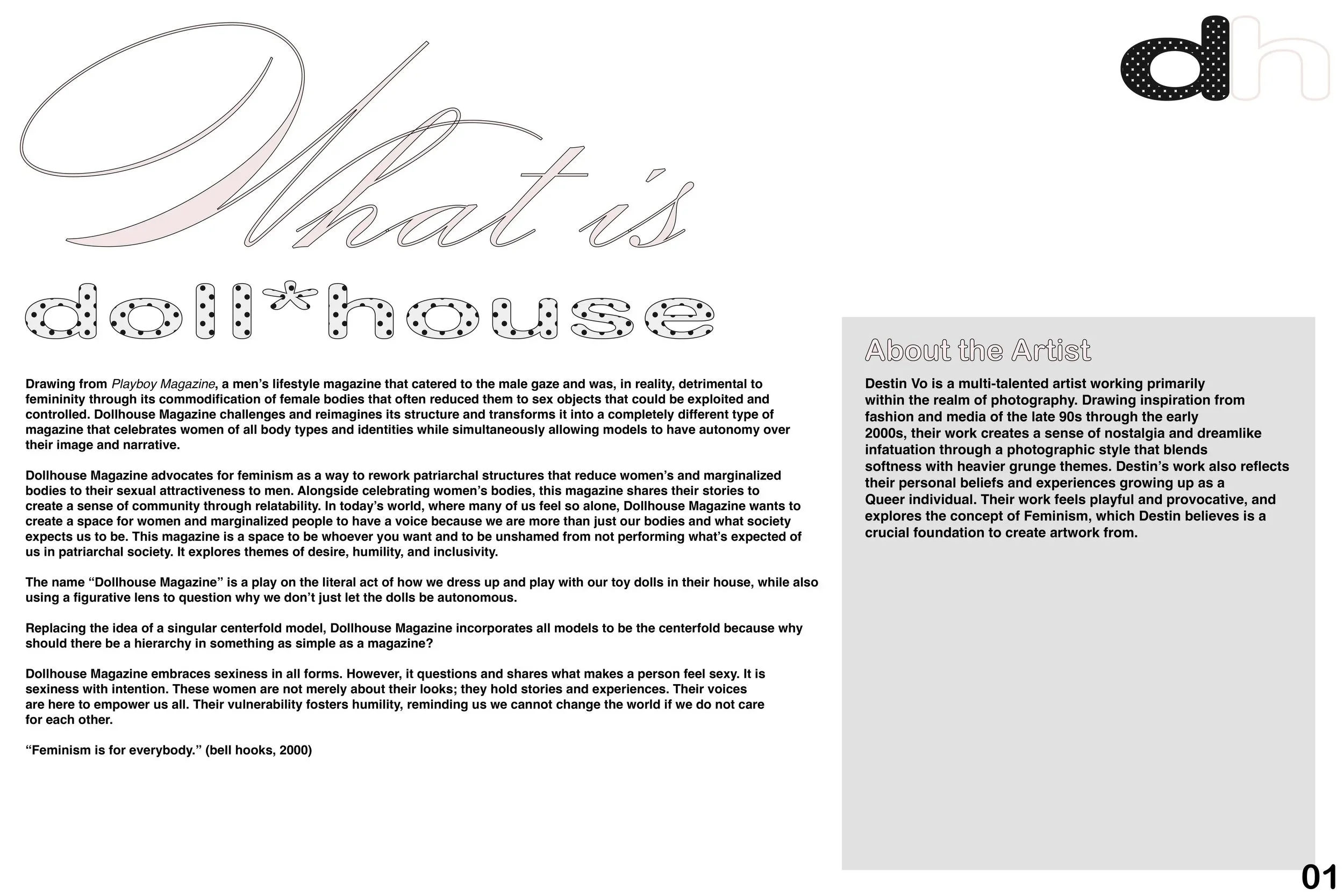
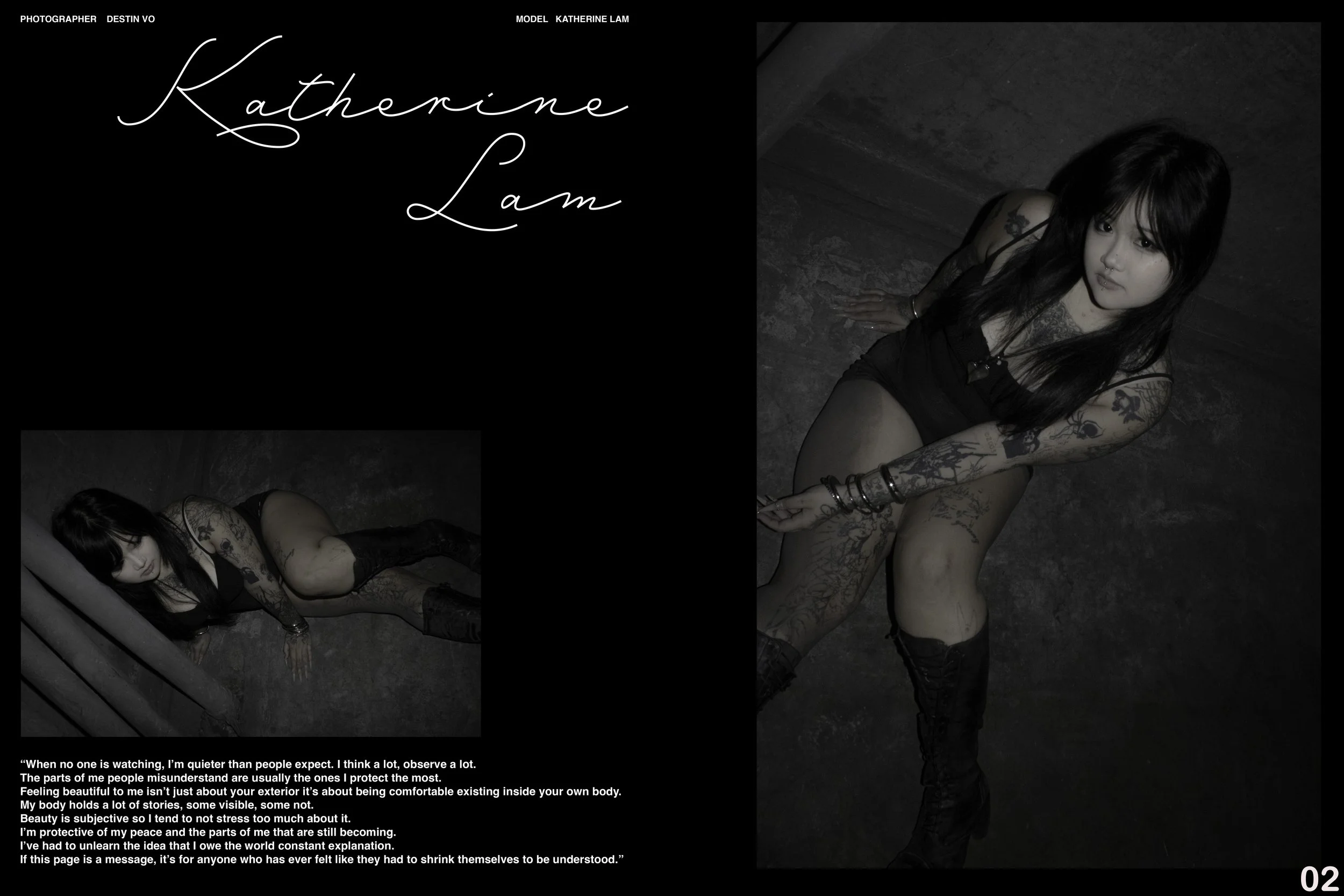
Katherine Lam
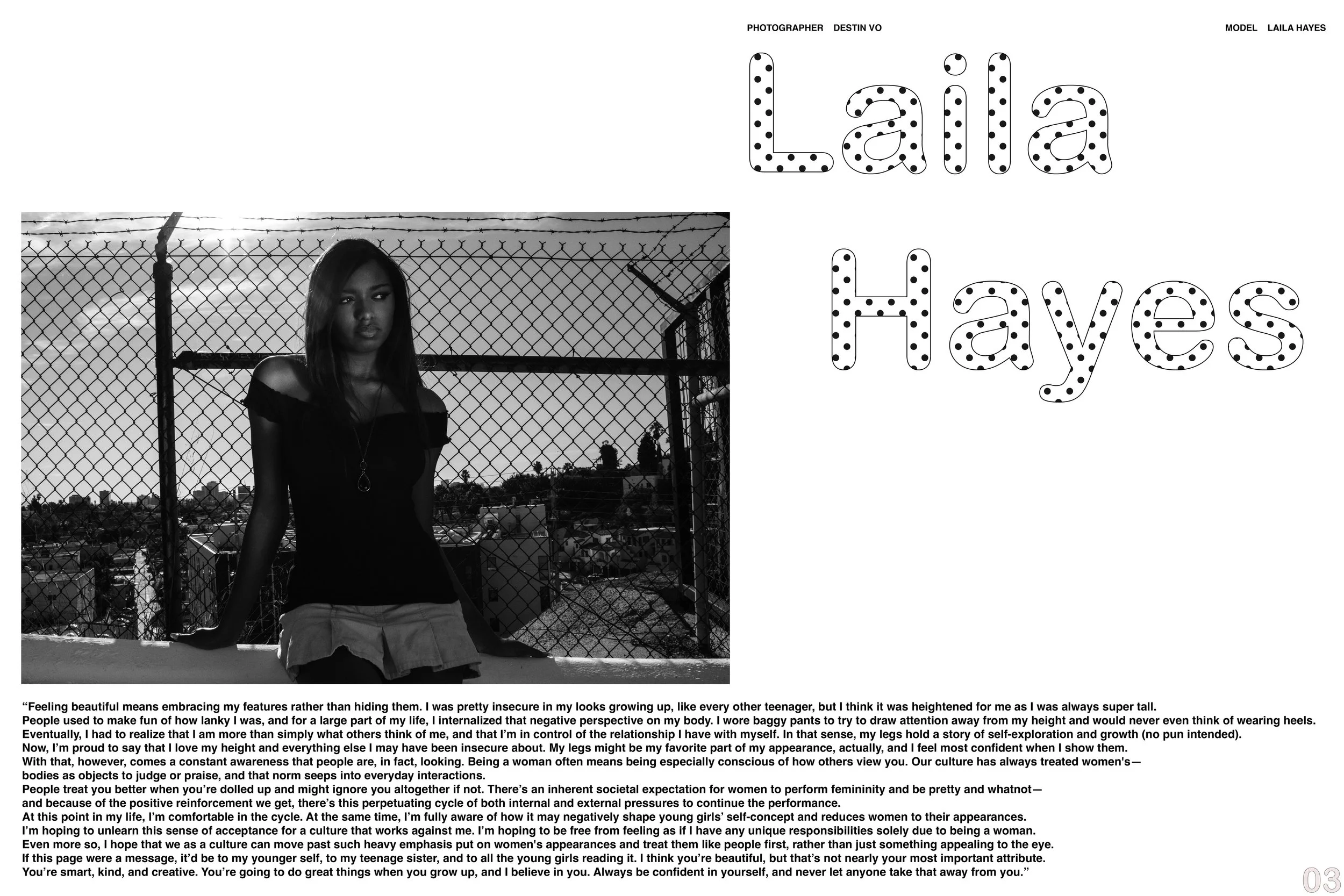
Laila Hayes

Centerfold
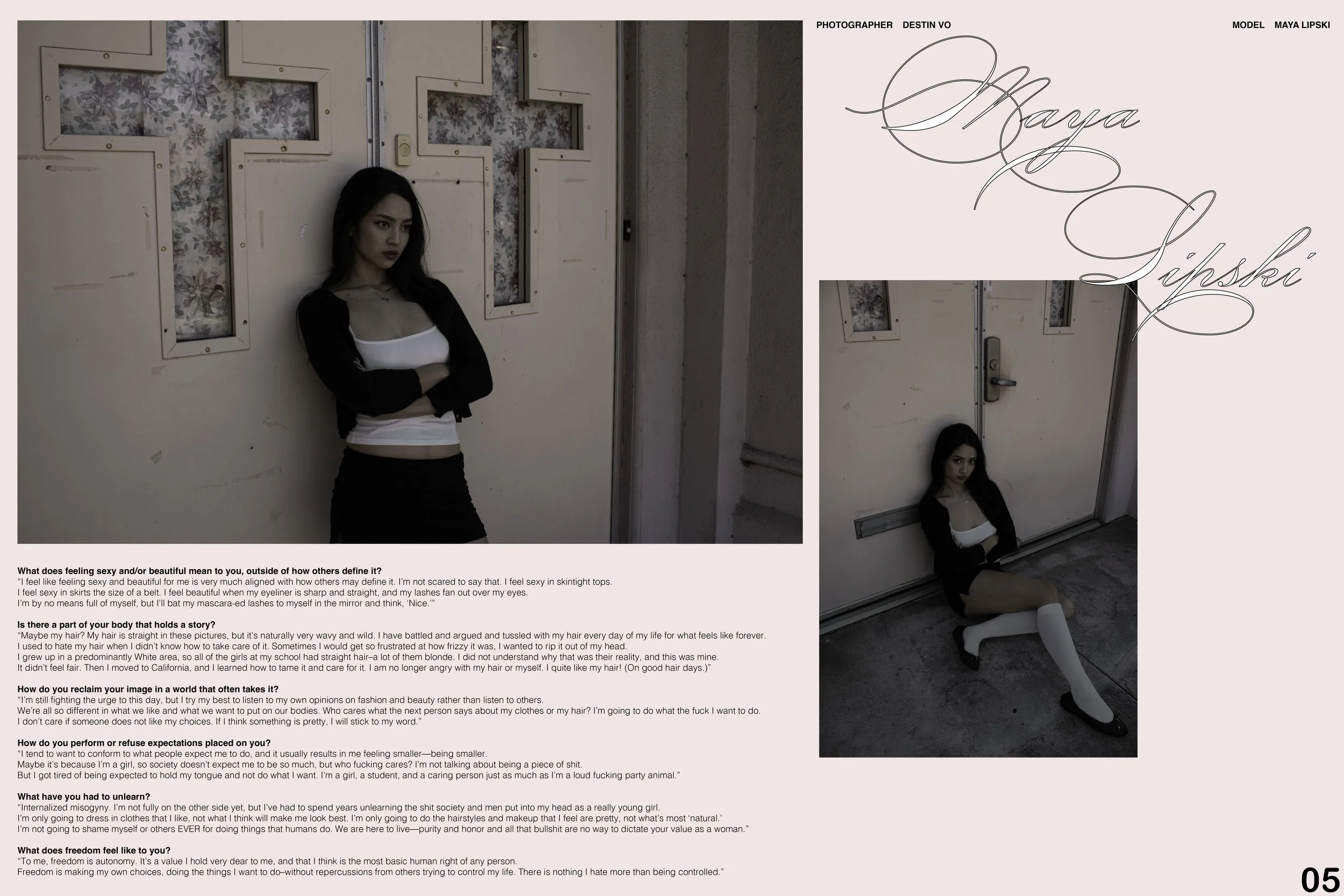
Maya Lipski
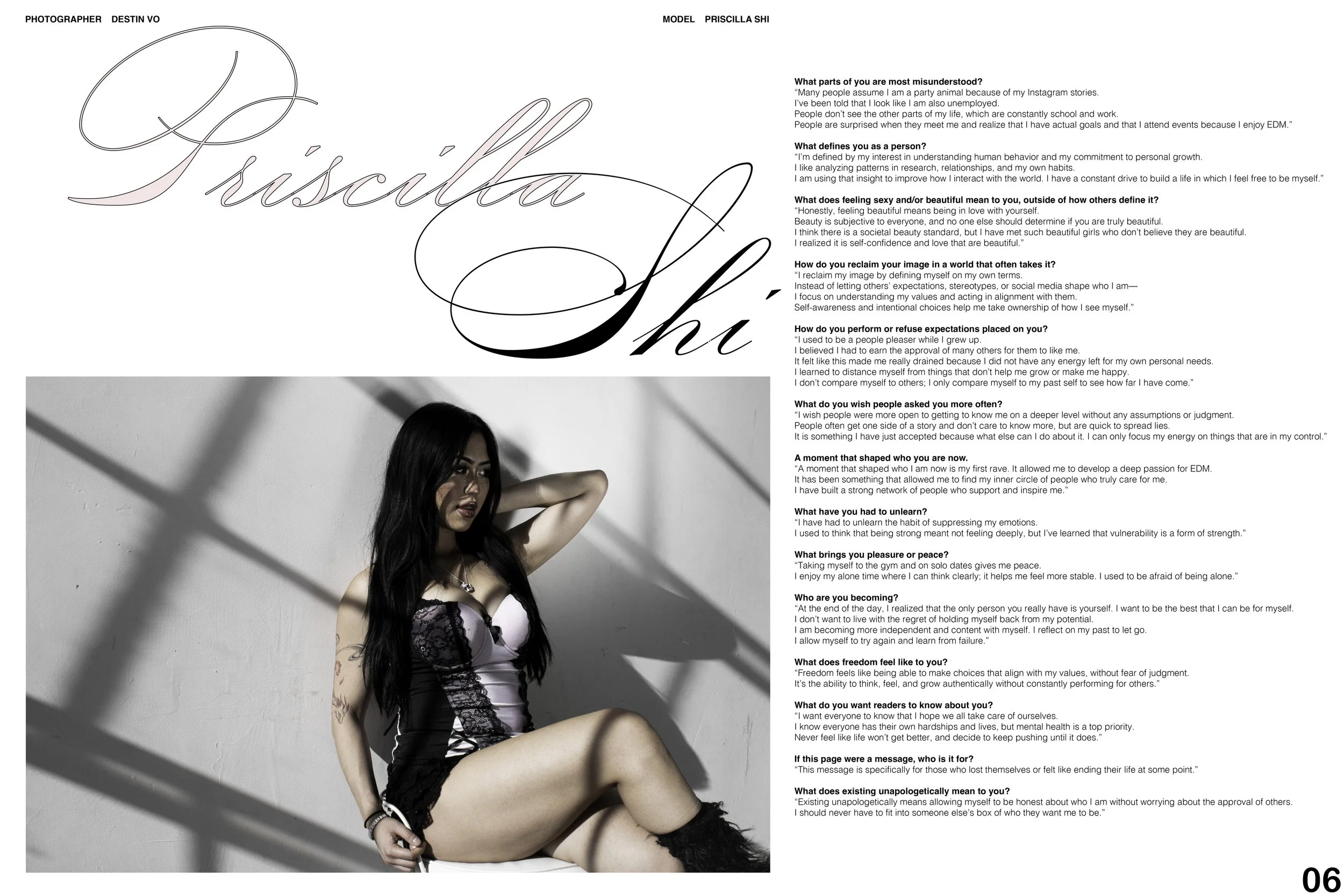
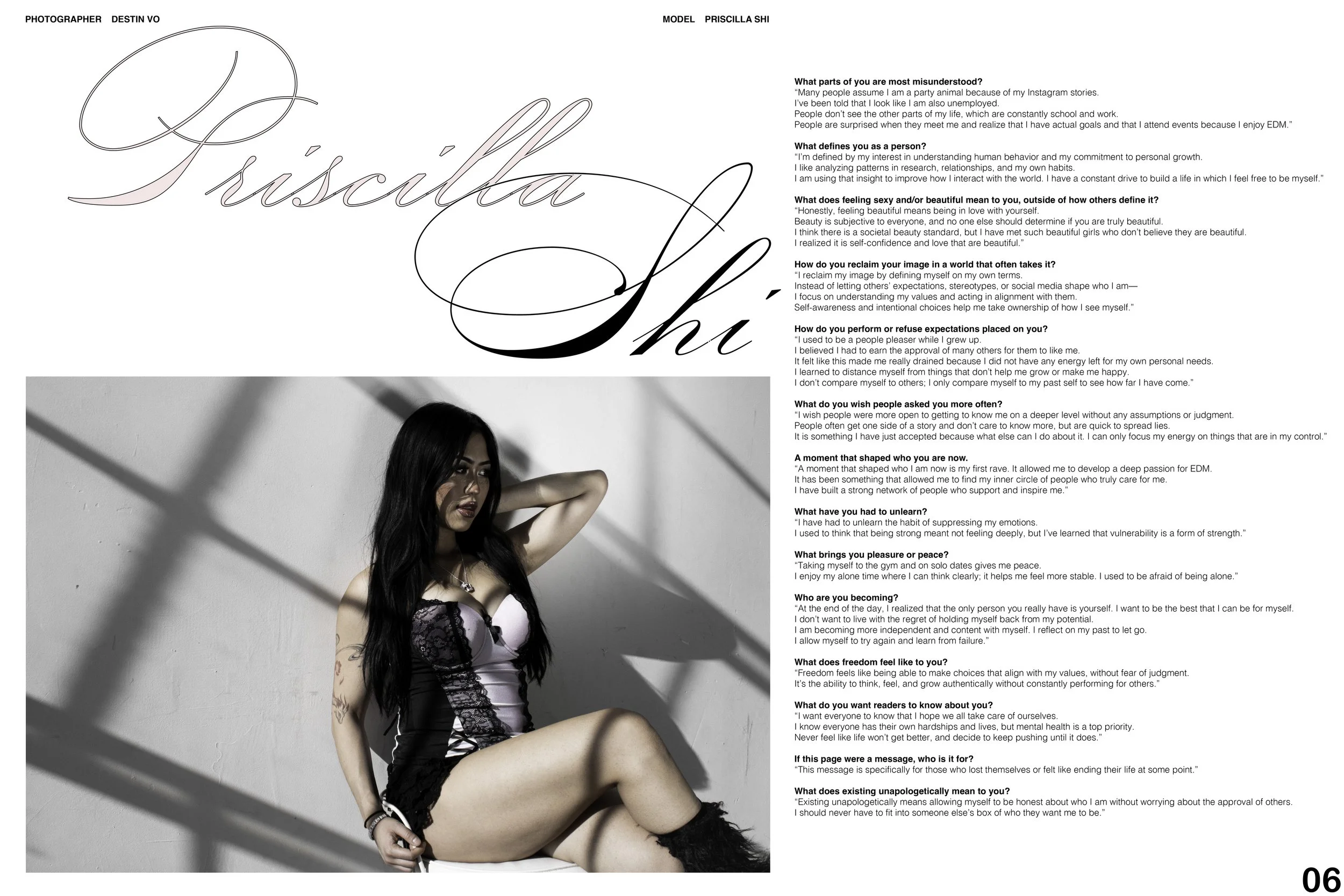
Priscilla Shi

Credits




Artist Statement
Drawing from Playboy Magazine, a men’s lifestyle magazine that catered to the male gaze and was, in reality, detrimental to femininity through its commodification of female bodies that often reduced them to sex objects that could be exploited and controlled. Dollhouse Magazine challenges and reimagines its structure and transforms it into a completely different type of magazine that celebrates women of all body types and identities while simultaneously allowing models to have autonomy over their image and narrative.
Dollhouse Magazine advocates for feminism as a way to rework patriarchal structures that reduce women’s and marginalized bodies to their sexual attractiveness to men. Alongside celebrating women’s bodies, this magazine shares their stories to create a sense of community through relatability. In today’s world, where many of us feel so alone, Dollhouse Magazine wants to create a space for women and marginalized people to have a voice because we are more than just our bodies and what society expects us to be. This magazine is a space to be whoever you want and to be unshamed from not performing what’s expected of us in patriarchal society. It explores themes of desire, humility, and inclusivity.
The name “Dollhouse Magazine” is a play on the literal act of how we dress up and play with our toy dolls in their house, while also using a figurative lens to question why we don’t just let the dolls be autonomous.
Replacing the idea of a singular centerfold model, Dollhouse Magazine incorporates all models to be the centerfold because why should there be a hierarchy in something as simple as a magazine?
Dollhouse Magazine embraces sexiness in all forms. However, it questions and shares what makes a person feel sexy. It is sexiness with intention. These women are not merely about their looks; they hold stories and experiences. Their voices are here to empower us all. Their vulnerability fosters humility, reminding us that we cannot change the world if we do not care for each other.
“Feminism is for everybody.” (bell hooks, 2000)